How Domain Protection became an agent inside GoDaddy Airo
GoDaddy was pivoting Airo from a single AI surface into a platform of product agents. Domain Protection needed one. Here's how I designed the DOP spoke agent from ground up and what it took to teach an AI agent when to speak, what to say, and when to stay quiet.
role
Design Lead
scope
the initiative.
One AI doing everything
wasn't going to scale
Airo started as a single conversational experience. But one agent can't meaningfully cover Domains, Websites, Email, and Security all at once. So GoDaddy shifted: Airo becomes the orchestrating hub. Each product builds its own spoke agent.
GoDaddy's Airo hub
orchestrates, delegates, holds context
Spoke agents
each product owns its own experience
DOP agent
this project
at a glance.
+
%
+
guiding principles.
What guided every
decision in this project
These principles became the shared language between design, eng, and PM.
🧭 Show context first
Before recommending anything, show the user exactly where their domain stands. What's protected, what isn't.
🗣 Get the tone right
Security messaging defaults to fear. This agent had to feel calm and advisory, like a knowledgeable friend, not an alarm.
🎯 Intent over events
Don't trigger on every event. Ask what the user is trying to do right now and only show up when it's genuinely relevant.
the logic.
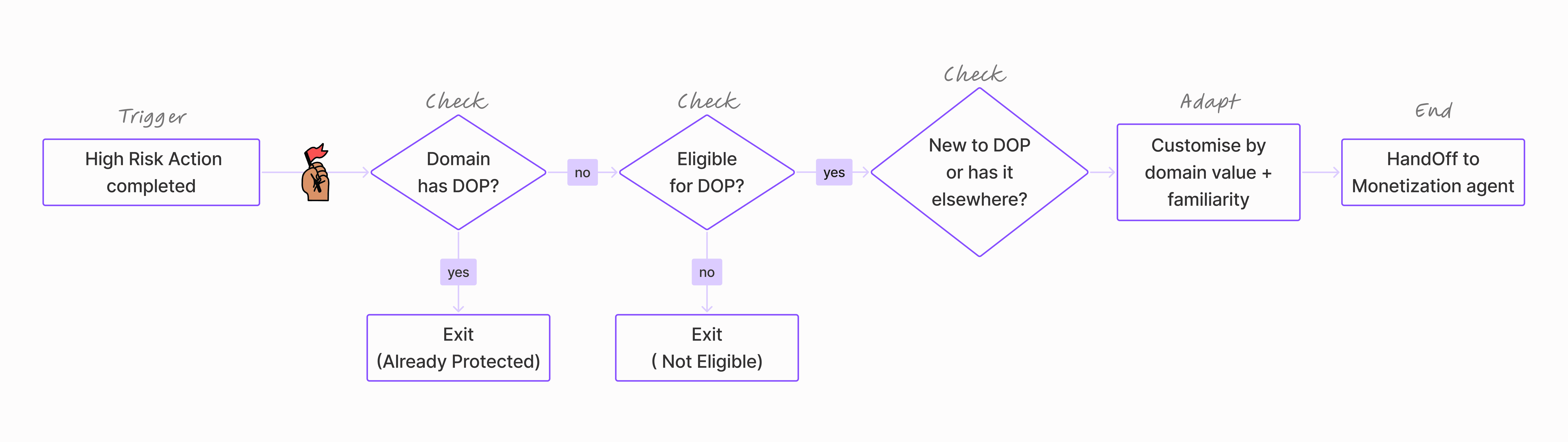
High-Risk Action flow
when to trigger, what to say
One of many flows was the High Risk Action flow. When a user completes a high-risk action such as changing the domain nameserver, the agent checks DOP status, domain eligibility, and user familiarity before deciding what (if anything) to surface.
the messy middle.
The real work:
what was tried, what was killed, what shipped
01 trigger timing
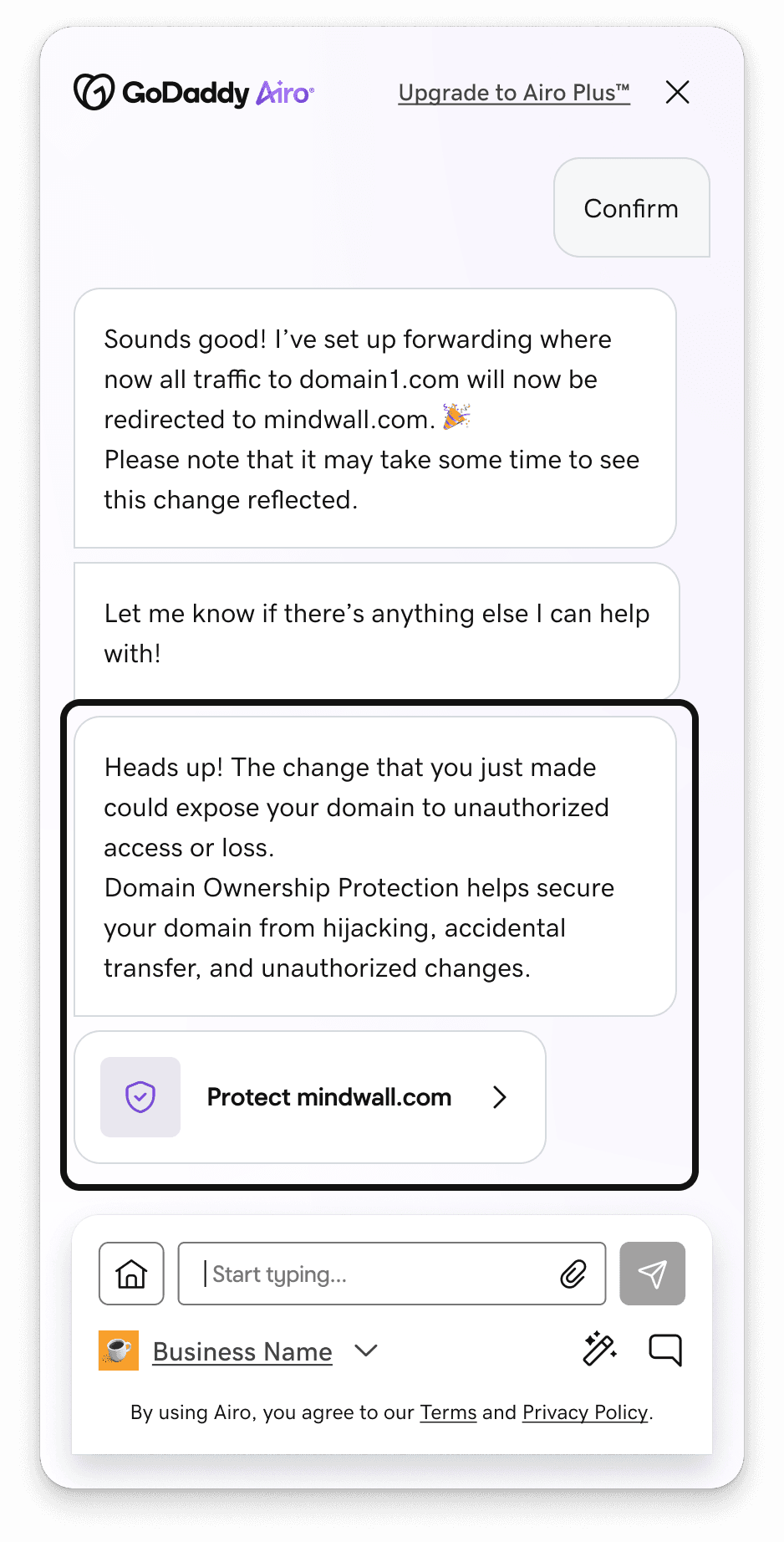
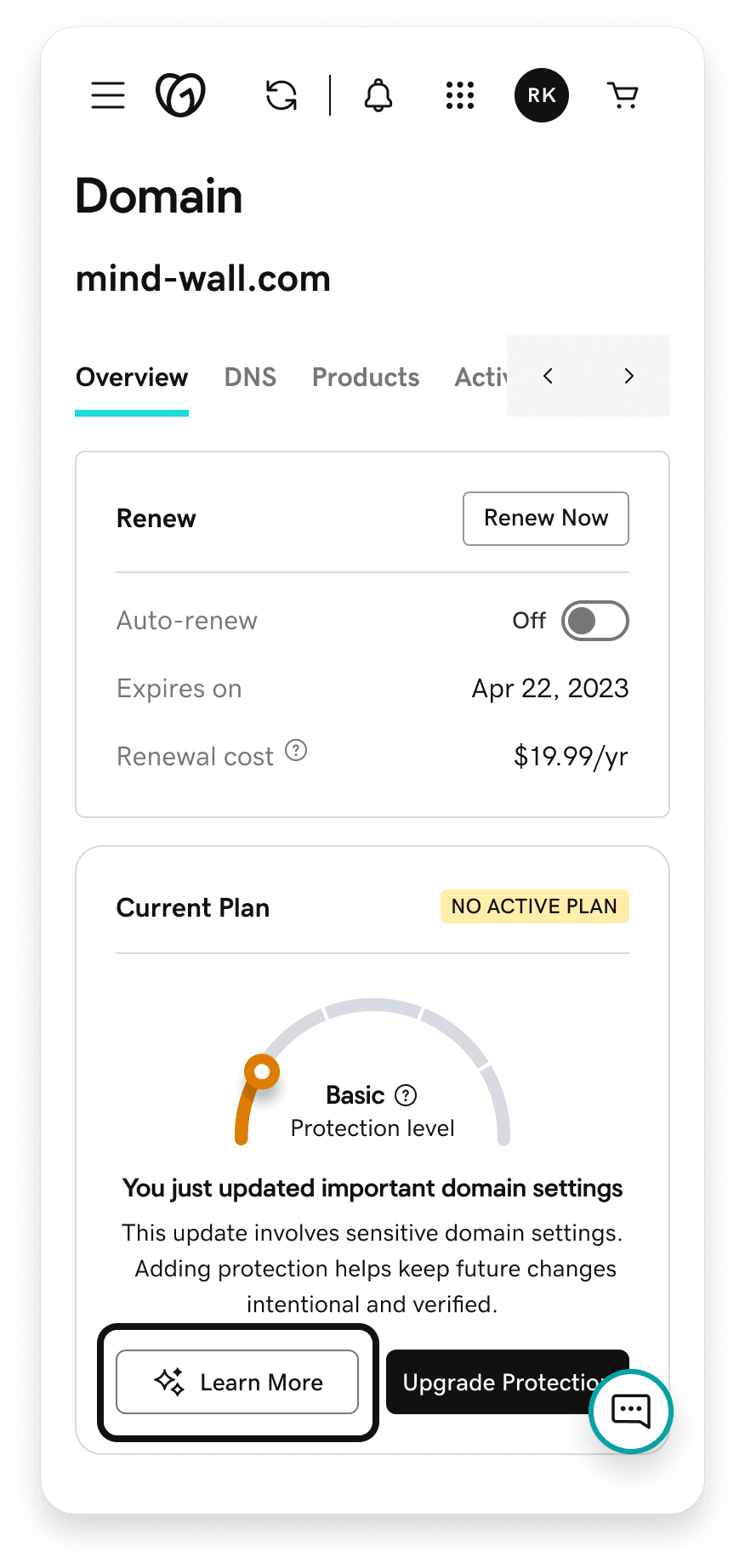
DOP was triggered at the right moment, but on the wrong surface
The plan was to trigger the DOP recommendation immediately after a high-risk action inside Airo chat.
02 copy + tone
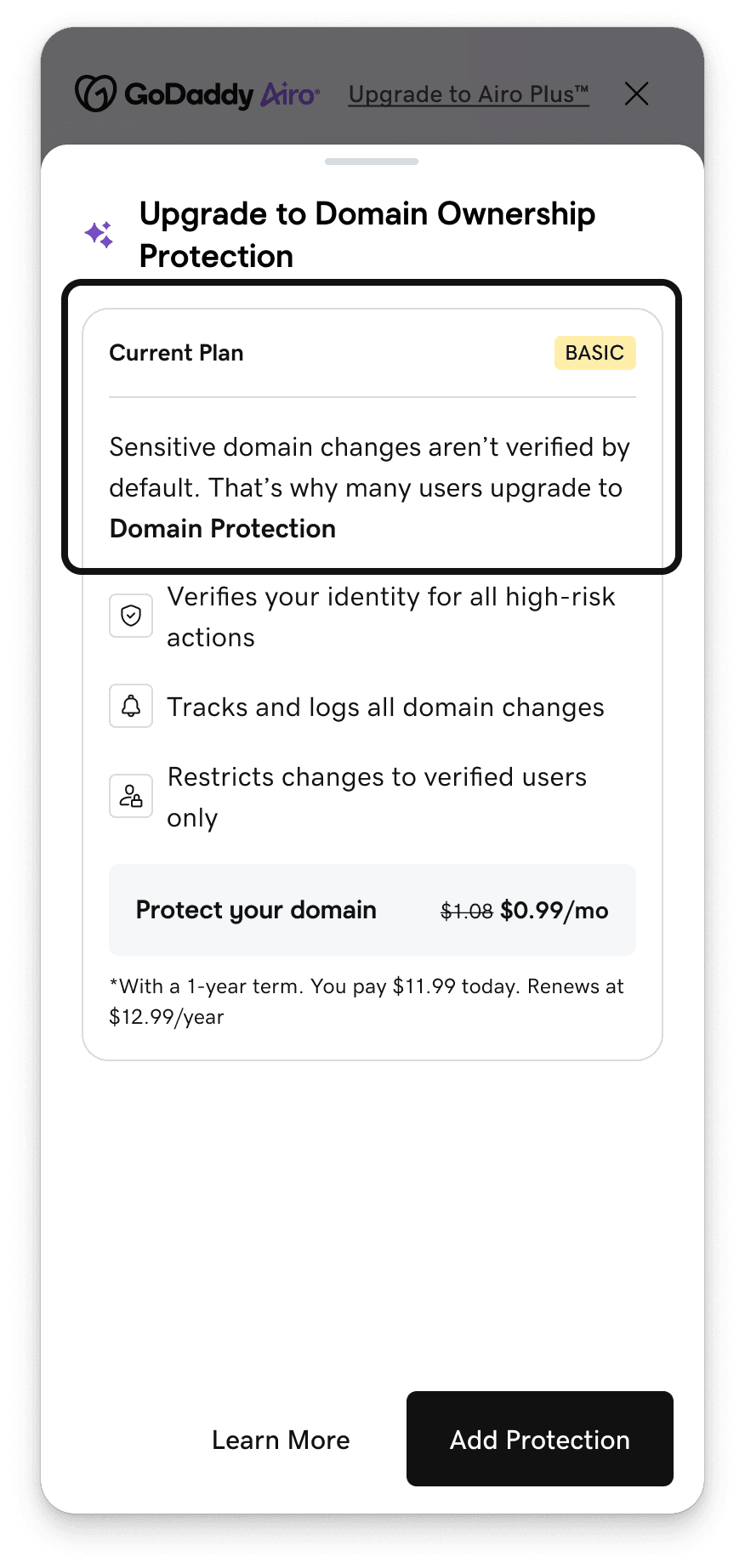
From alarming to informative
Trigger timing was solved. Next: what should the agent actually say?
03 chat vs panel
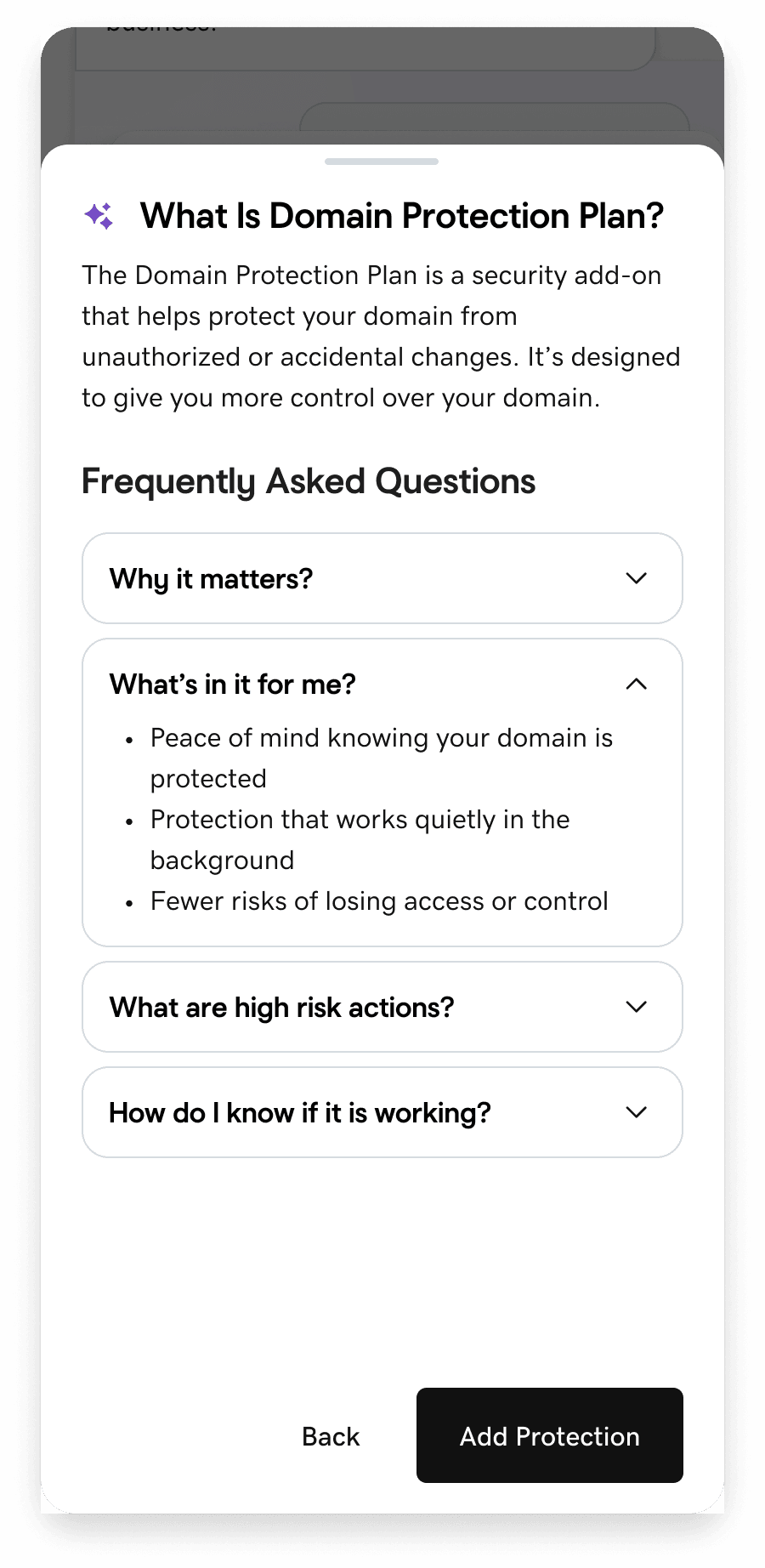
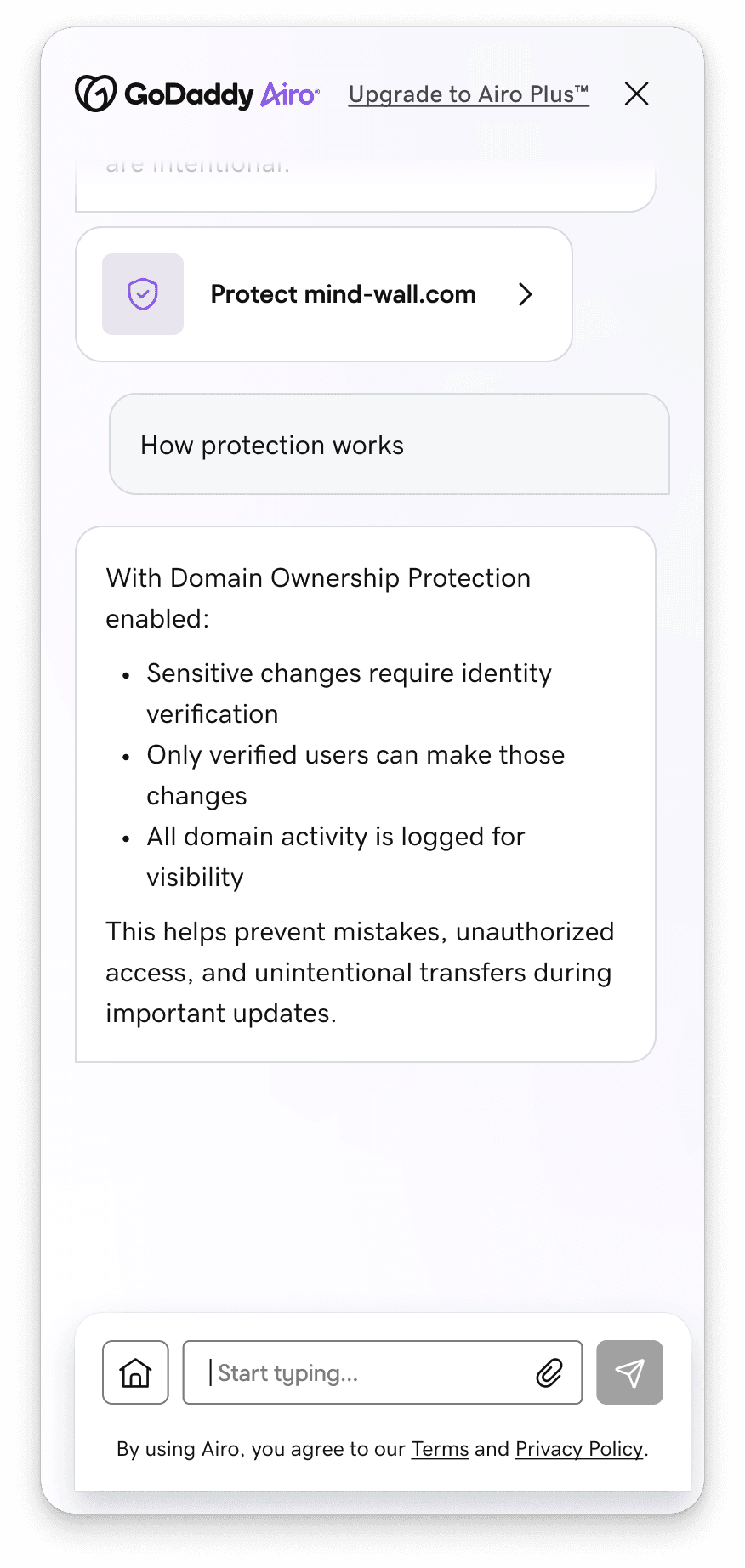
The panel wasn't the answer to everything
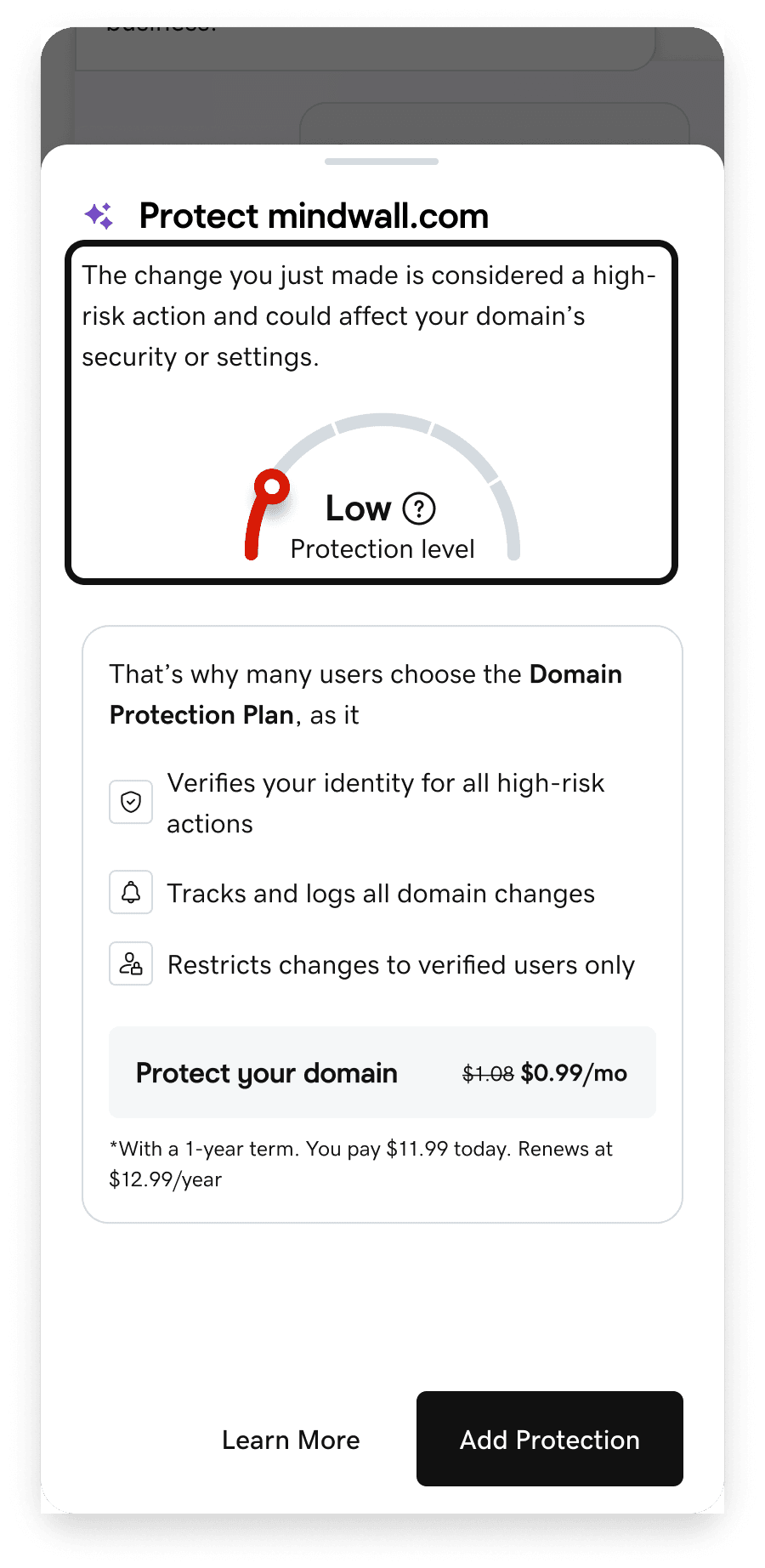
We couldn't control what Airo said in chat, but we fully owned the bottom-sheet panel. That made it prime real estate.
04 logic refinement
Added an extra signal to the logic
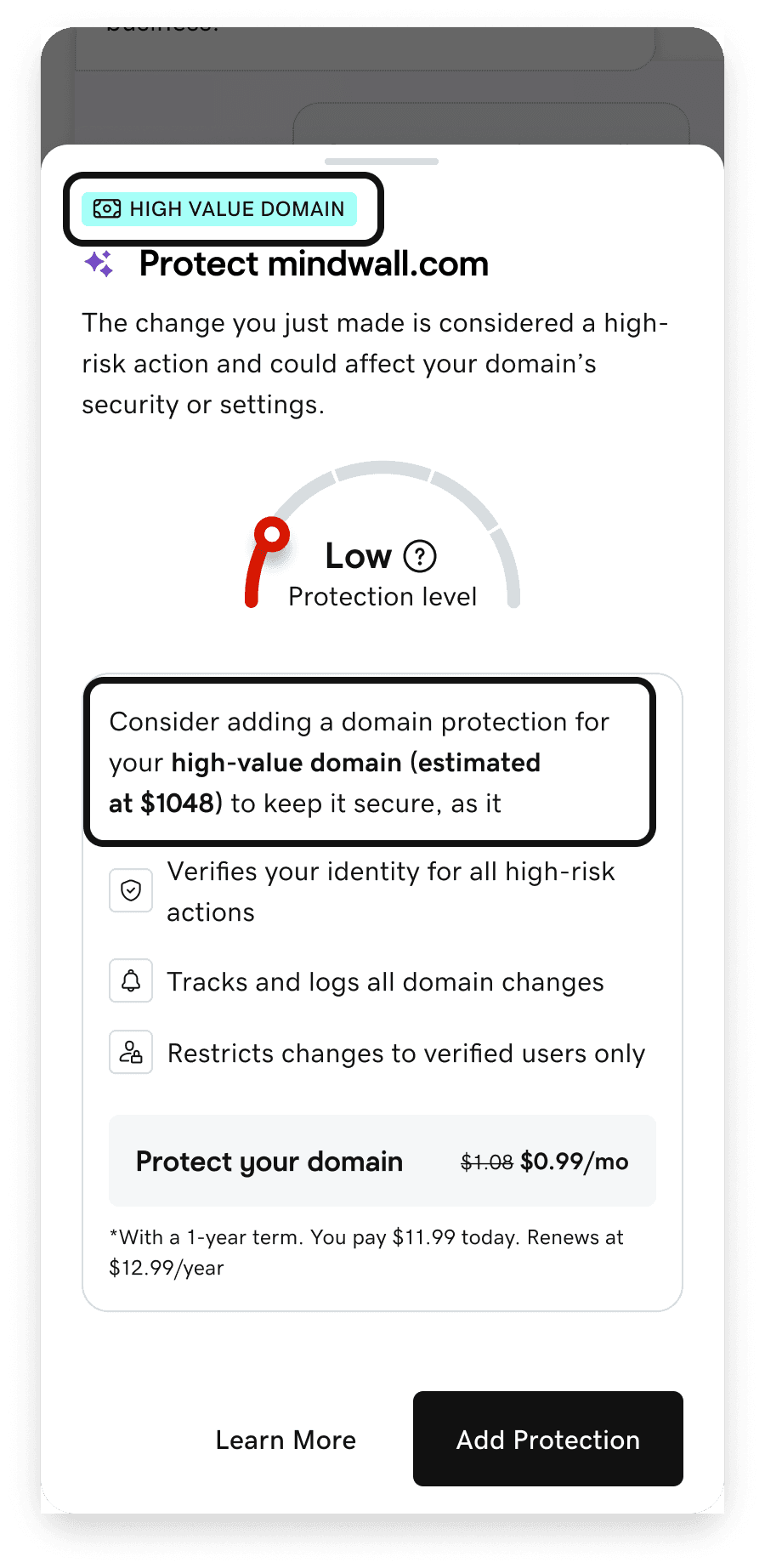
For domains without a high-value tag, the recommendation was generic. For high-value domains, the agent began surfacing the estimated domain value explicitly.
05 copy framework
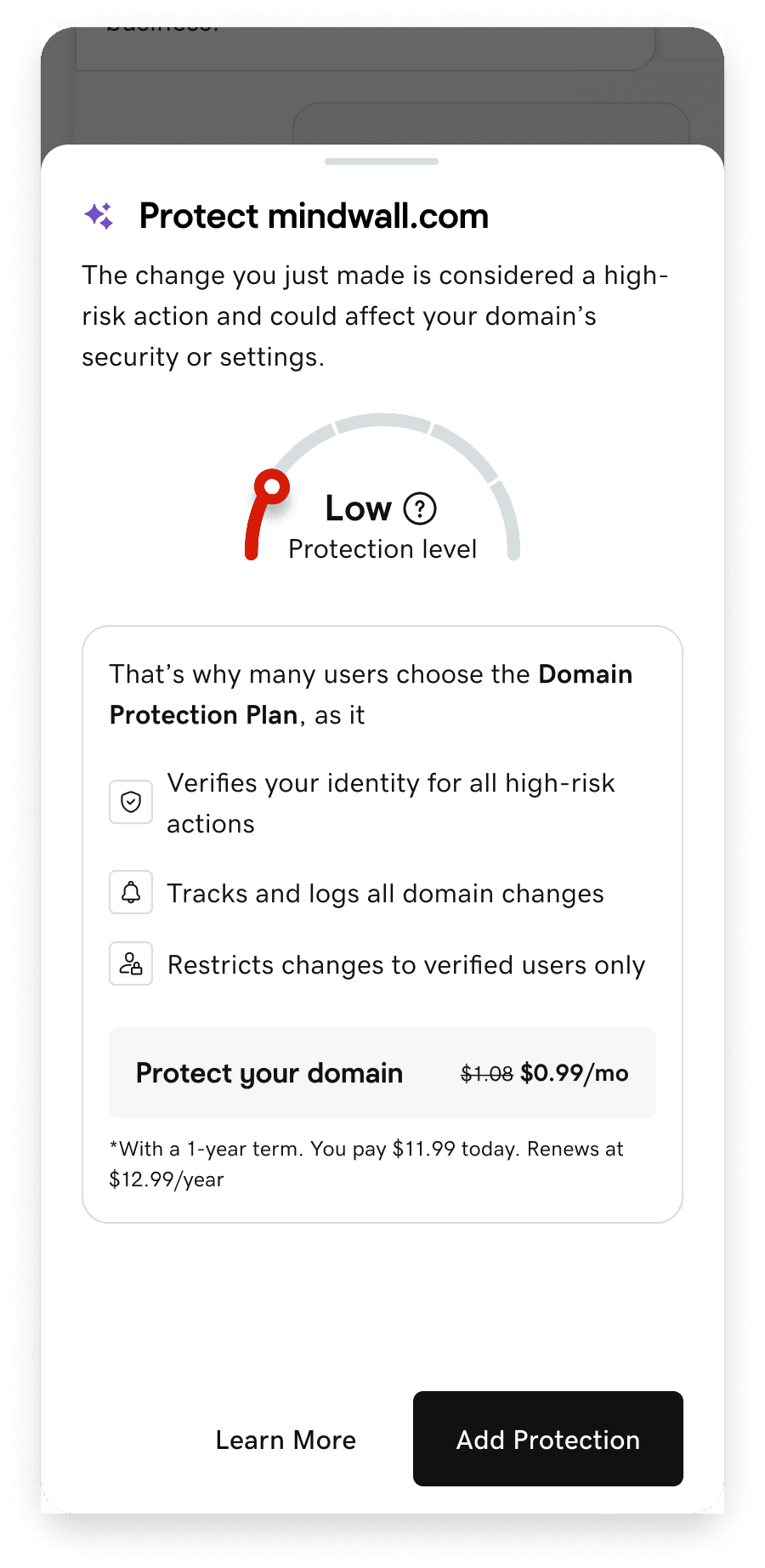
Same message, three tones
Messaging adapted based on what triggered the agent. Tone was a deliberate design decision to make the experience feel personal, each variant mapped to a different user mindset and risk context.
SUPPORTIVE
User-led DOP inquiry
"It's always a smart move to add an extra layer of protection. It helps prevent unintended changes and keeps your domain safe."
NEUTRAL
DNS / nameserver change
"You've just completed an update to your domain. Based on its protection level, here's a quick way to boost security."
FEAR-BASED
Autorenew or privacy OFF
"The change you just made is a high-risk action and could affect your domain's security or settings."
the experience.
Conversation to confirmation.
One uninterrupted flow
Domain context surfaced in Airo, protection state made visible, DOP recommended and purchased, without leaving the conversation.
what I learned.
What building in uncharted territory
taught me
01
Restraint is a design decision
Knowing when not to show the agent mattered as much as what it said. Every PM wanted the panel. Saying no and having a principled reason was part of the design work.
02
Build principles before screens
With no reference point, shared principles became the foundation. They aligned design, eng, and the product before a single screen was drawn.
03
Agentic UX is about judgment
When to speak, what to say, when to stay quiet, these are design decisions, not engineering ones. That's the new skill this kind of work demands.
outcome.
Took Domain Protection from a static upsell into an agent-led experience inside Airo, one that shows up at the right moment, speaks in the right tone, and lets users understand and act without ever leaving the conversation.